Introducing: Mahindule (2024)
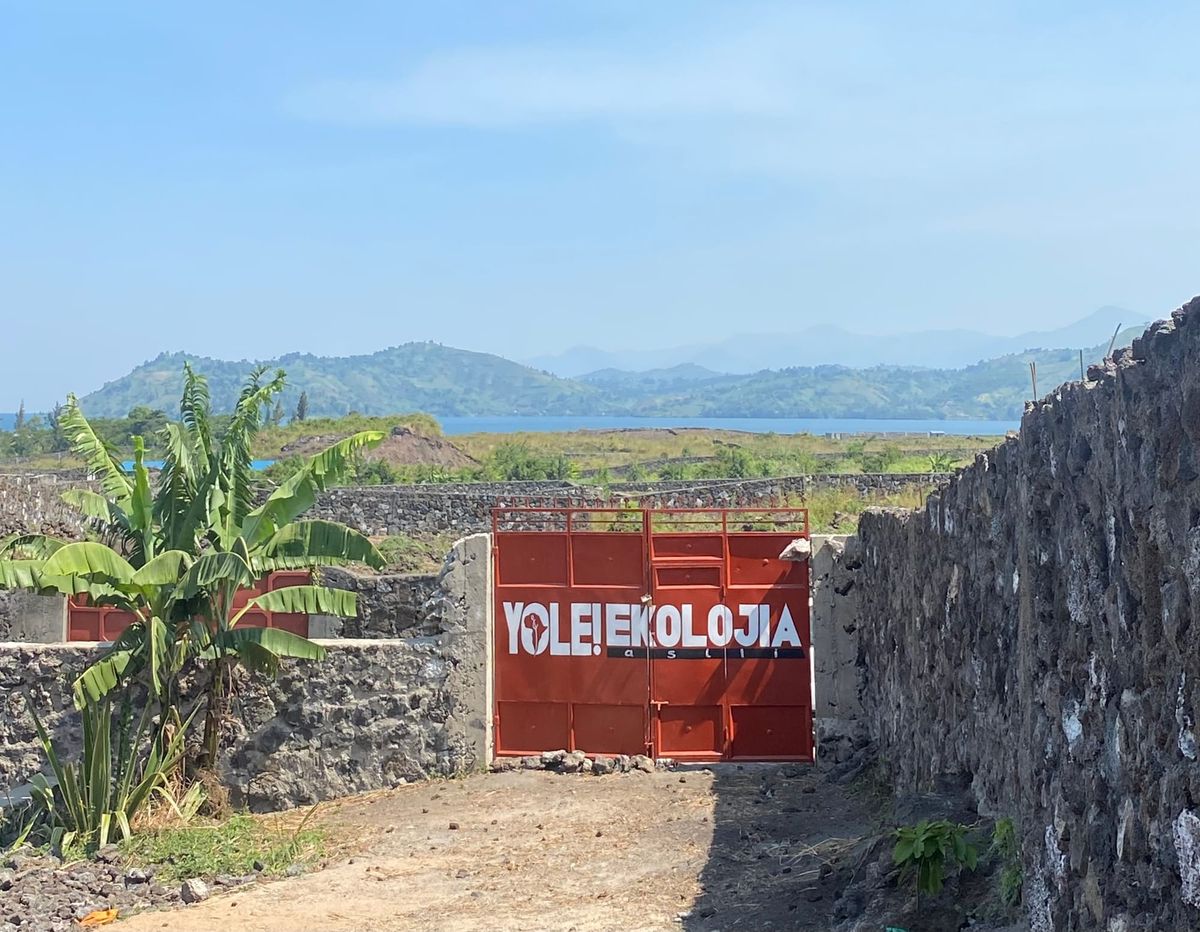
In the east of the Democratic Republic of the Congo (DRC), the colonial violence we witness today did not begin with the conflicts of the last 30 years, as much of the mainstream media narrative would have us believe. The undercurrent of conflict, extraction and dispossession reaches back centuries, existing both before and throughout the region’s colonial history, and continuing in different forms long after its formal end.
The many layers of this violence have contributed to an extreme humanitarian crisis that has profoundly shaken communities across the east. More than 7 million people are displaced, with a death toll surpassing 6 million since 1996 alone. Women’s bodies have been weaponised, while the exploitation of the region’s extraordinary natural wealth continues to feed global industries. The DRC holds some of the world’s largest cobalt reserves, a resource central to the technologies that shape our everyday lives, while tens of thousands of children are known to work in unsafe, illegal and unregulated mining conditions.
We hope to speak to these layers with greater depth in future refections, tracing the systems and histories that existed both before. during and after Belgium’s extractivist colonial venture beginning in 1908, and recognising that what we see today did not emerge in isolation.
This systemic history has also created an environment in which the international NGO sector has flourished. A humanitarian economy has developed around crisis in which at its worst, has the recipe to reproduce dependency, dehumanise communities and minimize complex lives. There is an endless cycle of bandaid solutions, fly in fly out contractors and external operatives navigating an ever changing environment, often without the relationships, ancestral knowledge or long-term grounding needed to truly understand the places in which they work.
While immediate aid is essential to survival, survival cannot be the only horizon.
Without approaches that look beyond the immediate and invest in local knowledge, existing infrastructure systems and self-determination, the humanitarian response risks becoming permanent rather than momentary. When international funding is suddenly withdrawn as we saw and are continuing to see through humanitarian aid cuts, it is communities on the ground who feel the impact most deeply. The scaffolding for self-sufficiency was never sufficiently established within an NGO economy.
And yet, the DRC is not a distant crisis. Its story is intimately connected to the human family, through the technologies we use, the resources we consume and the ecological systems that sustain us all. What happens in the DRC is part of a much larger human and planetary story.
This context is pivotal to understanding the environment from which the movement and philosophy of Yole!Africa and For Records Sake stems.
The community collaborations undertaken at Yole!Africa are, in many ways, a direct response to these humanitarian shortcomings. Rather than beginning from dependency, we begin from independence. It is about removing the assumption that knowledge must be brought in from elsewhere, recognising the knowledge that already exists.
Communities are not passive recipients of aid. They are custodians of memory and keepers of truth who carry the knowledge that cannot be captured within the language of a project report. This is the relational understanding that underpins our work and why grassroots movements hold such profound power.
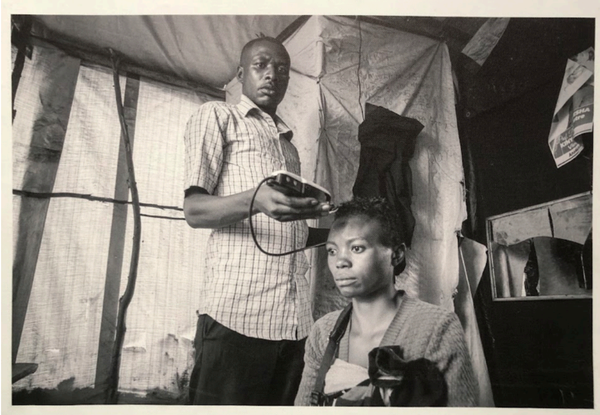
The images which will be shared from the Mahindule residency program, came from a series of photography workshops through which Mamas were invited to channel their realities through the mediums of photography as a means for storytelling. The workshops were undertaken in the Bulengo displacement camp during 2024, with Yole!Africa members supporting a number of Mama's learn the fundamentals of storytelling through photography and community journalism. The outcome of those workshops made up the Mahindule photography exhibition which was then later showcase at the William Grant Still Art Center in Los Angeles.
We see these works as a gift, and as a gateway into their worlds.
They are an act of reclamation, that documents reality through their own eyes. Their work invites us to listen, to learn and to sit with the depth of the intergenerational and ongoing colonial violence to which they have been exposed.
What is unique about the Mahindule project is that even in an environment surrounded by conflict, these images simultaneously speak to renewal, rebirth and survival. It speaks to what is carried when people are displaced from the physical places they once called home, and to the ways in which home can continue to exist through people, memory, community and connection.
There are five parts to the 2024 Mahindule program, this is merely an introduction to its manifestation.
You may purchase a physical photo book of the 2024 Mahindule program.